
The main challenge in improving Korean BBQ tables turnover at Korean BBQ restaurants is that customers grill their own food, receive many side dishes, and enjoy drinking and chatting while eating, which prolongs their stay. Therefore, the optimization strategy should not rush diners, but rather eliminate non‑eating time and ineffective waiting periods.
Data shows that the average dining time per Korean BBQ table at Korean BBQ restaurants is 70–90 minutes. If we can shorten the dining time to 50–60 minutes, we can gain at least one extra table turn. During peak hours, this extra turn means a revenue increase of at least 30%.
1. Restaurants often have customers waiting during peak dining hours. Restaurants can provide menus to them while they wait. Most customers will have already chosen their dishes mentally before they sit at the table, which significantly reduces the time they spend reading the menu and deciding. The biggest time‑drain in Korean BBQ is that customers only look at the menu after they sit down and then place their orders—this process alone wastes at least 10‑15 minutes and stands as one of the core issues holding back Korean BBQ tables turnover.
2.During peak dining hours, Korean Barbecue restaurants can offer free samples of snacks, desserts, and drinks to waiting customers. This practice stabilizes their mood, reduces the frustration of waiting, and decreases the likelihood of customers leaving for other restaurants.
3.Manual ordering takes a lot of time. Introducing an efficient ordering method, such as equipping each table with a selfservice ordering system, saves time.
4.Restaurants can play light and cheerful music to lift customers’ spirits, which indirectly boosts their appetite and speeds up their grilling and eating.
5.During Korean barbecue grilling, residual food particles on the Korean pan grill or metal mesh cooking grate continue to heat and turn charred, which compromises the flavor and texture of other ingredients. Servers should therefore monitor the cooking status and stay ready to swap out grates at any time. Frequent grate changes improve the dining experience and, in turn, subtly speed up the grilling process.
6.If your Korean BBQ restaurant uses Korean BBQ electric grills, choose Korean pan grills with good non‑stick properties when purchasing. This reduces the frequency of Korean pan grill changes during cooking and thus increases Korean BBQ tables turnover.
If yours is Korean charcoal grill restaurant, buy a commercial charcoal igniter . It lights the charcoal in just 2–3 minutes, saving time in the kitchen and speeding up service.
If you use Korean BBQ table gas grills, choose thicker Korean pan grills or metal mesh cooking grates. Gas grills heat up quickly with an open flame; thicker plates or grates distribute heat more evenly and prevent temperatures from concentrating in the center. This reduces the burning of food and leaves fewer residues on the pan grill, thereby cutting down the frequency of pan grill changes and increasing Korean BBQ tables turnover.
7. Among electric, charcoal, and butane Korean BBQ gas grills, choose the best electric griddle for your Korean BBQ restaurant because it delivers the fastest table turnover. They distribute heat evenly, reduce the risk of burning, let customers adjust it easily, eliminate the need for kitchen staff to preheat charcoal, and relieve servers from constantly monitoring each gas grill’s flame.
8.Choose Korean electric BBQ grills with a power rating of 2000W or higher. Low power heats too slowly, prolongs grilling time, and hurts Korean BBQ tables turnover.
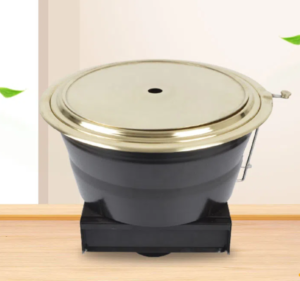
9.Grease dripping from the Korean pan grill goes into the drip tray, so choose an Korean BBQ electric stove with a deep drip tray. After customers finish grilling, staff must replace the pan grill but do not need to replace the drip tray, since the deeper drip tray holds more grease. A shallow drip tray requires frequent changing because it cannot hold much grease, which indirectly slows Korean BBQ tables turnover.
10.Choose high-quality electric barbecue grill, because they have low failure rates.
11.Before serving dishes, servers should proactively help customers turn on the Korean BBQ grill and remind them about the temperature regulator. Many customers do not understand the equipment during cooking, so they may cook for over ten minutes without getting the food done—simply because they have not set the correct temperature dial, and they do not realize it.
12. Installing a good BBQ exhaust system or equipping each Korean BBQ table with purification devices effectively reduces the amount of smoke that hits customers’ faces during grilling, enhances their relaxed and enjoyable dining experience, and increases customer loyalty.
13.Poor table layout also contributes significantly to low turnover in Korean BBQ restaurants. The main customer base consists of 2‑to 4‑person groups, so tables for 2‑4 people should account for 60%‑80% of the seating, with 4‑person tables making up 20%‑40%.
14.Use rectangular Korean BBQ tables and avoid round ones, because round tables take up more space.
15.Use movable chairs instead of booths. During peak hours, even a 4‑person table can add 1‑2 extra seats, boosting space utilization.
16.Limit the kitchen area to 30% or less of total floor space, and maximize the number of Korean barbecue tables.
17. Promote duo and four‑person combo meals to reduce ordering hesitation and let the kitchen prep ahead.
Introduce lunch combos like BBQ with bibimbap to fill the midday gap and increase sales. Combos offer customers perceived savings, while enabling better cost and spend‑per‑customer management.
18.Introduce special offers in non‑peak periods (e.g., late evening) to steer some diners toward quieter slots and spread the demand more evenly throughout the day.
19.Maintain an adequate number of waitstaff. After customers finish and vacate the table, servers must clean it quickly so the next party can sit down.
20. During grilling, oil splatters onto the Korean BBQ table top, so cleaning speed directly affects table turnover. Experience shows that oily wooden tabletops prove hard to wipe clean, and lowquality marble easily holds oil stains. We recommend sintered stone tabletops because they clean easily, resist staining, and withstand high heat, making them the top choice for Korean BBQ restaurants today.
MEDA BBQ CONCEPT
Email: [email protected]
Whatsapp+8618138505729