
What is Yakiniku? Yakiniku is Japanese BBQ name. It is a fusion of Japanese culinary traditions and foreign influences.
What is Yakiniku?
Unlike the bold flavors of Korean barbecue or the robust seasoning of Chinese barbecue, Japanese yakiniku barbecue emphasizes the “natural taste of the ingredients”.
It reflects Japan’s dedication to high-quality ingredients, enhanced by Yakiniku sauce and BBQ marinade.

Why is Yakiniku So Popular?
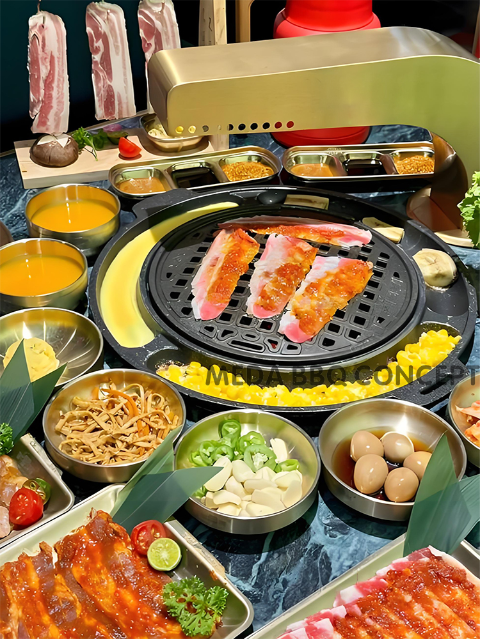
Yakiniku is Japanese grill name. Authentic Japanese yakiniku (grilled meat) showcases only the freshest ingredients, with Japanese chefs being exceptionally particular about premium meat cuts.
When combined with distinctive local seasonings, it creates a uniquely flavorful experience featuring that perfect charred aroma, succulent tenderness, and a subtle sweet glaze.
The richly marbled meat offers depth of flavor with a delicate fragrance, delivering satisfying richness without any greasiness.
This culinary excellence stems from Japan’s pervasive “craftsman spirit” — an unwavering pursuit of perfection in every task. From ingredient selection to flavor pairing and presentation, every detail is thoughtfully considered, reflecting deep respect for food itself.
This is why Yakiniku Japanese BBQ captivates so effortlessly: it invites diners to savor and explore Japanese Yaki niku culture with curiosity. It is not merely a meal but an embodiment of the pursuit of exceptional dining and reverence for the artisan’s dedication.
What is Yakiniku sauce?
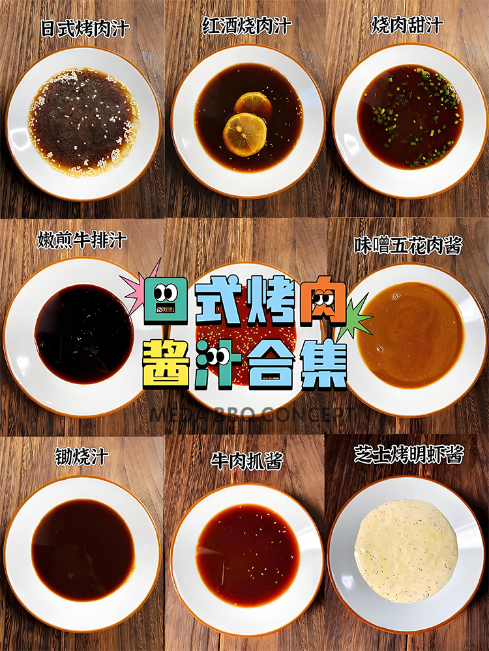
This classic Japanese Yakiniku sauce perfectly locks in the natural flavor of meat.
Combine three teaspoons of soy sauce, two teaspoons of mirin, one teaspoon of sake, and one teaspoon of sugar in a small saucepan.Heat over (low heat), stirring constantly until the sugar dissolves.Remove from heat and let cool completely.Stir in minced garlic and chopped scallions.
The sauce strikes “a well-balanced sweet-savory note”, offering a refreshing counterpoint to rich meats.
If you love rich flavors, sesame paste dipping sauce is a must-have.
Ingredients:2 teaspoons sesame paste1 small piece fermented bean curd1 teaspoon Chinese chive flower sauce1 teaspoon light soy sauce1 teaspoon sugarAppropriate amount of warm water
Steps:First, crush the fermented bean curd and mix it with sesame paste. Then add light soy sauce, sugar, and Chinese chive flower sauce in sequence. Pour in warm water gradually until the sauce becomes smooth and creamy when stirred evenly.
This rich sesame paste dipping sauce pairs perfectly with fatty meats, delivering a layered taste experience that balances richness with depth.
And refreshing green mandarin dipping sauce.
Ingredients:3 teaspoons fresh green mandarin juice,2 teaspoons Japanese sushi vinegar,1 teaspoon mirin,a small handful of katsuobushi (dried bonito flakes).
Preparation:Pour the sauce ingredients into a bowl, finely chop the katsuobushi, and add it to the bowl. Stir well to combine, and the sauce is ready.
The sweet-tartness of green mandarins perfectly mixes with the fresh aroma of sushi vinegar, while katsuobushi imparts a unique umami. This sauce also pairs wonderfully with various meats, adding a refreshing twist to grilled dishes.
Japanese Soy Sauce Flavor
In addition to the rich sauce dips, the marinating recipes for Japanese-style grilled meat are equally crucial to mastering the deliciousness.
Ingredients:4 teaspoons Japanese soy sauce3 teaspoons mirin2 teaspoons sake2 teaspoons sugarA dash of minced garlic and gingerHalf an onion, shredded1 teaspoon white sesame seeds1 teaspoon cooking oilSlice the meat.Add shredded onion and other sauce ingredients to a bowl, stir to combine.Add the meat and mix well by hand.
Marinate in the refrigerator for 2-4 hours.Please take out the meat and brush a little cooking oil on its surface to prevent sticking to Japan grill during grilling.
Japanese-Style Sweet & Spicy Glaze
Ingredients:5 tsp teriyaki sauce1 tsp sweet chili sauce1 tsp honey1 tsp lemon juiceA pinch of minced garlicA pinch of finely chopped onionA dash of crushed black pepper1 tsp cooking oil
Instructions:Slice the meat and lightly tenderize it with a few taps to help it absorb the juice.In a bowl, mix all the sauce ingredients until the sugar dissolves.Coat the meat evenly with the sauce, massaging it in for better absorption.Refrigerate and marinate for 1or 2 hours before cooking.
Garlic Butter Flavor
Ingredients:20g unsalted butter2 tsp minced garlic1 tsp chopped parsleyA pinch of saltFreshly ground black pepper (to taste)1 tsp olive oil
Instructions:Slice the meat and make shallow cuts on the surface (without cutting all the way through).Melt the butter and mix it with minced garlic, chopped parsley, olive oil, salt, and black pepper.Evenly spread the mixture over the meat’s surface.Marinate at room temperature for 30 minutes (do not refrigerate, as the butter will solidify).
What kind of meat are available for Yakiniku?
Japanese barbecue features a diverse range of ingredients, primarily including meat, seafood, and vegetables.

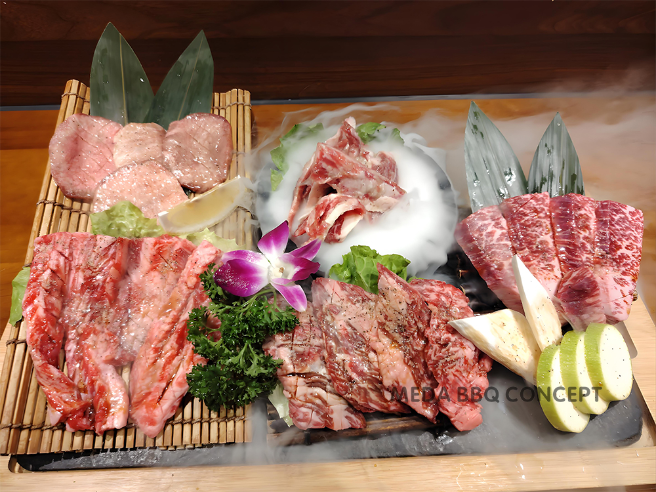
Yakiniku beef ( Wagyu )
The premium choice for Japanese barbeque, renowned for its marbled fat distribution and rich yet non-greasy texture.
The A5 grade represents the highest quality Wagyu available.

Beef Brisket
Rich in marbling with tender texture, this is a popular choice at Japanese yakiniku restaurants.
The perfect balance of lean meat and fat melts as it grills, releasing savory juices and an irresistible aroma of beef butter that keeps you coming back for more.

Beef Rib Finger Meat
This cut comes from the ribs, offering a tender and juicy texture with rich flavor, making it a favorite among young food lovers.

Beef Shoulder Meat
With abundant marbling, tender texture, and rich, savory flavor, it is also highly popular among food enthusiasts.

Filet Mignon
It is a cut of beef tenderloin. It’s tender, lean, and low in fat, making it a favorite among many women

Pork Belly
With alternating layers of fat and lean meat, the fat becomes crispy after grilling while the lean meat remains tender and juicy.
It can be served with various sauces and dips, making it a common choice in Yakuniku barbecue.

Plum Blossom Meat
It comes from the front leg of the pig. This cut features a balanced fat-to-lean ratio, tender and juicy texture, and springy elasticity. It’s also a must-order dish in barbecue restaurants.
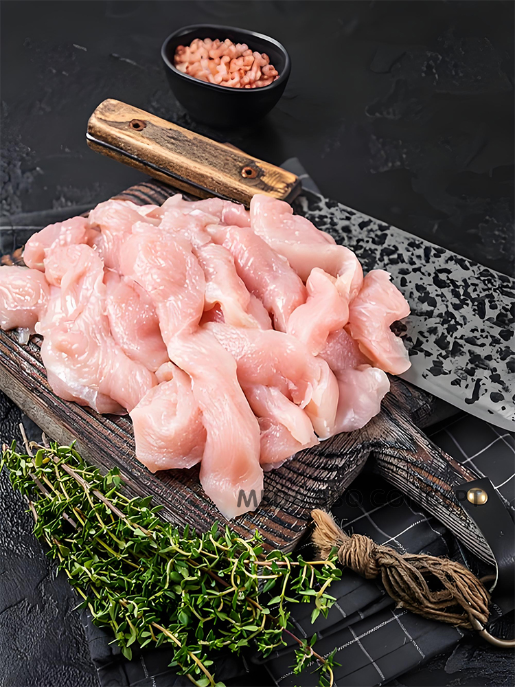
Chicken Breast
A lean and protein-packed cut with minimal fat, perfect for health-conscious diners. For optimal flavor, we recommend marinating before grilling to enhance its delicate texture.

Chicken Thigh Meat
It is tender and juicy, and during grilling, the fat from the chicken skin gradually oozes out. The meat beneath the skin absorbs this fat, resulting in a more aromatic and succulent texture.
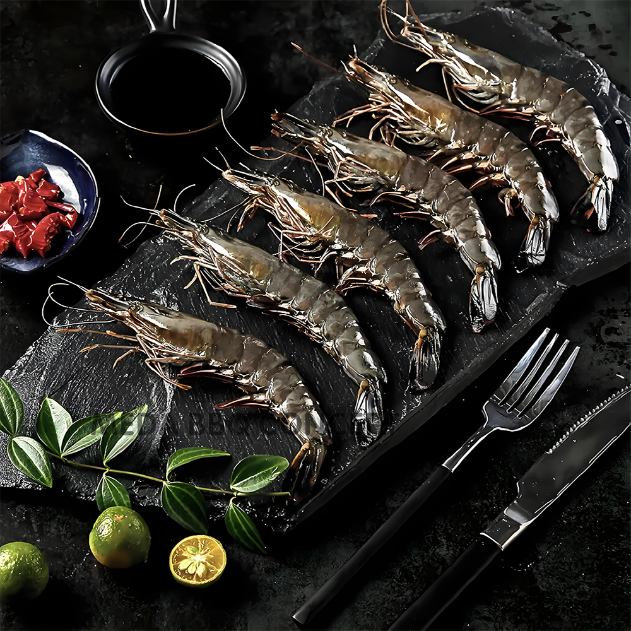
Shrimp
In Japanese Yakiniku barbecue, chefs often select larger shrimp varieties, like tiger prawns and black tiger shrimp.
They peel the shrimp but keep the tails intact, then grill them until the bodies turn red. Served with secret recipe seasonings, it offers a unique flavor with a tender and crispy texture.

Salmon
Rich in oils and with a tender, soft texture. When grilling, coat the salmon with olive oil or butter, sprinkle with a pinch of salt and crushed black pepper.
Once the surface turns golden brown, the meat under the skin should remain juicy and succulent, melting in your mouth upon biting.
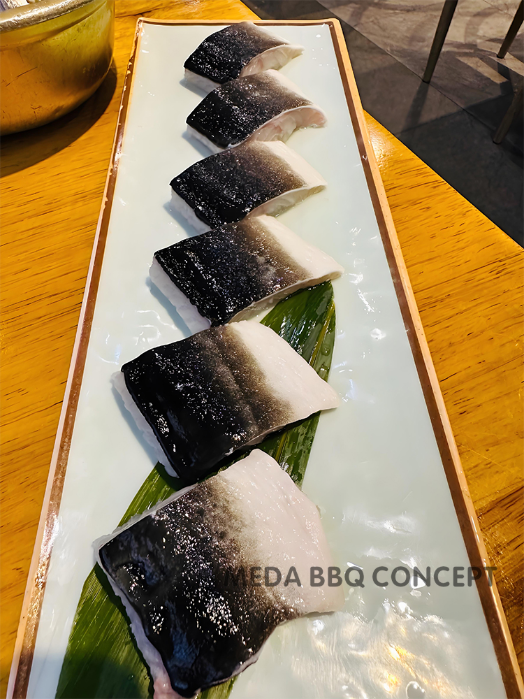
Eel
Eel is a representative ingredient in Japanese cuisine and is also highly popular in Japanese barbecue.
After preparing the eel, grill it over charcoal while brushing with a secret sauce.
Cook until the skin turns golden brown and crispy, while the inner meat remains tender, juicy, and rich in fats.

Shiitake mushrooms
It has a unique flavor. When grilling mushrooms, start by cooking the top first.
As the mushrooms heat up, their natural juices pool inside the cap, creating a concentrated, savory broth.
Seasoned diners like to drink the juice and then enjoy the grilled mushrooms alongside their barbecue meats.
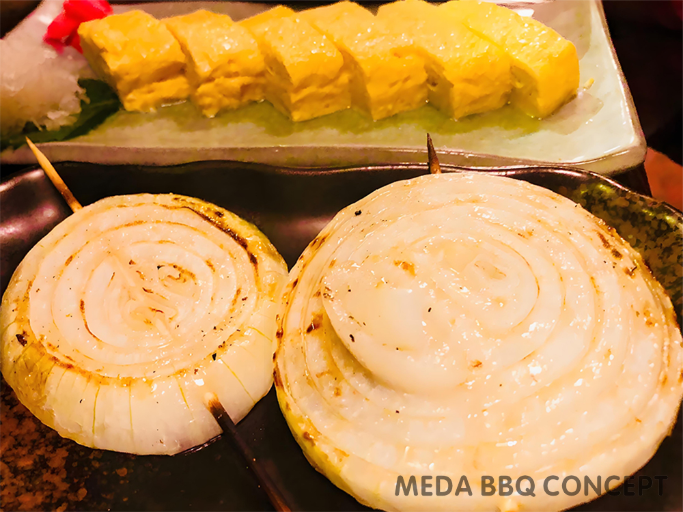
Onion
Sliced into threads or rounds, when grilled, onions become crisp and sweet.
Paired with meat, they cut through greasiness and refresh the palate, while adding depth to the texture.
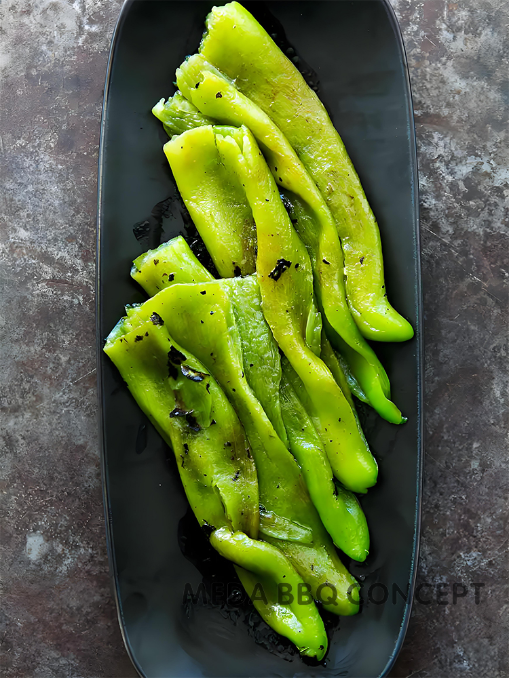
Green Bell Peppers
After grilling, the skin of green bell peppers turns slightly charred, while the inside remains tender and soft.
Their sweet and refreshing taste adds a fresh note to grilled meats, balancing the rich flavors with a crisp, vibrant bite.

Corn
Cut into small segments and slowly grill until the surface turns golden brown, emitting a sweet aroma.
Corn is a common vegetable in Japanese barbecue, offering a delightful balance of caramelized sweetness and tender texture when grilled.
What kind of wine are available for Yakiniku BBQ?
Wine is an indispensable beverage to pair with grilled meat. Its flavor profile is designed to complement the taste of the meat and sauce, not only enhancing the aroma and cutting through greasiness but also elevating the convivial atmosphere of gatherings.
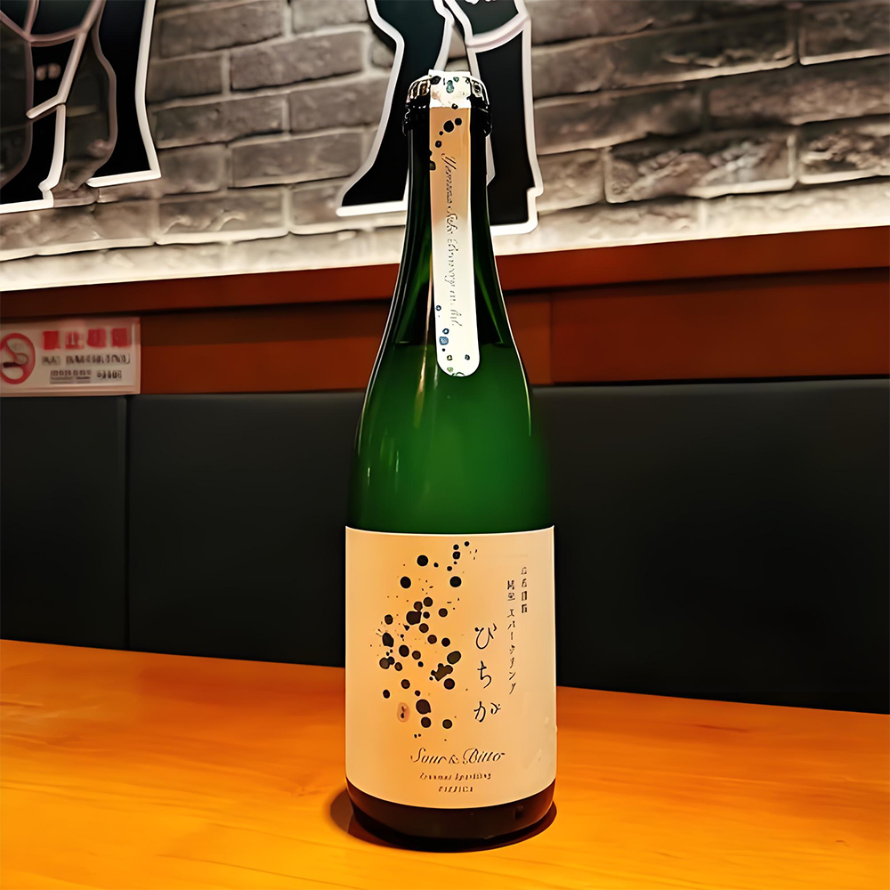
Sake
It is a traditional pairing for Japanese grilled meat. After enjoying rich, flavorful grilled dishes, a sip of sake helps cut through the greasiness and refresh the palate.
Brewed from rice, rice koji, and water, sake boasts a fresh, delicate texture and a unique smell from fermentation. It harmonizes perfectly with the savory scent of grilled meat.
The elegant aroma of sake melts away the heavy, oily sensation, creating a balanced dining experience.

Fruit Wine
Fruit wine is made by steeping or fermenting various fruits, such as plum, yuzu, and peach.
With low alcohol content, it boasts charming fruity aromas. Its sweetness makes it a popular choice among women, perfectly complementing the savory notes of Yakiniku grilled meats with a light, aromatic finish.

Fruit Wine
Fruit wine is made by steeping or fermenting various fruits, such as plum, yuzu, and peach.
With low alcohol content, it boasts charming fruity aromas. Its sweetness makes it a popular choice among women, perfectly complementing the savory notes of Yakiniku grilled meats with a light, aromatic finish.
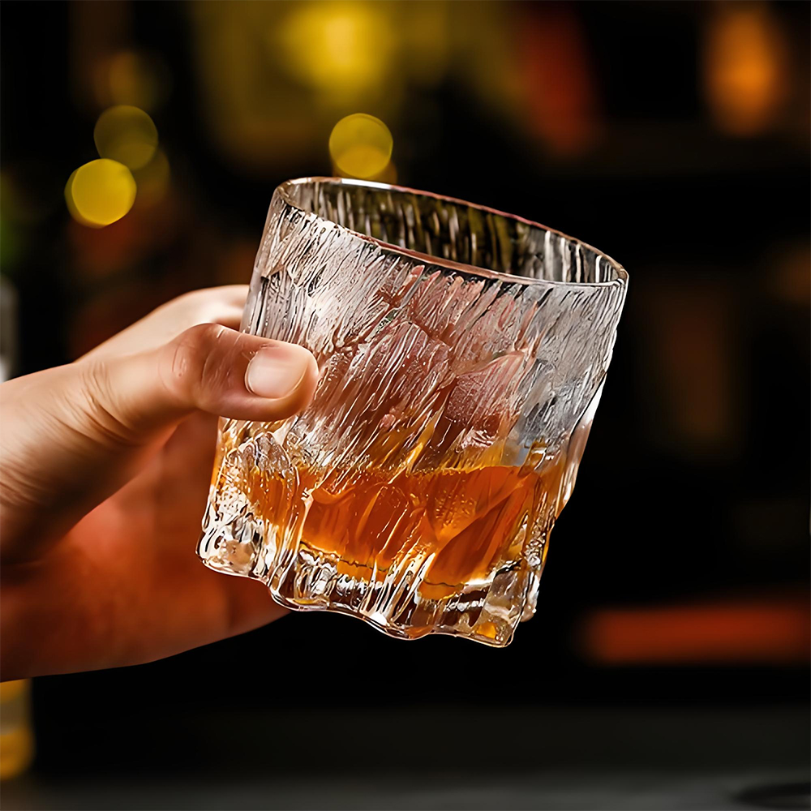
Whiskey
Whiskey is an essential choice for men’s gatherings.
It is a distilled spirit made from grain, through the processes of saccharification, fermentation, distillation, and aging.
Its complex brewing process imparts a unique and rich aroma, making it a perfect pairing for grilled meats. With a higher alcohol content, whiskey appeals to those who favor strong spirits, enhancing the bold flavors of barbecued dishes with its deep, robust character.
Yakiniku Korean & Japanese BBQ Photos

Yakiniku BBQ
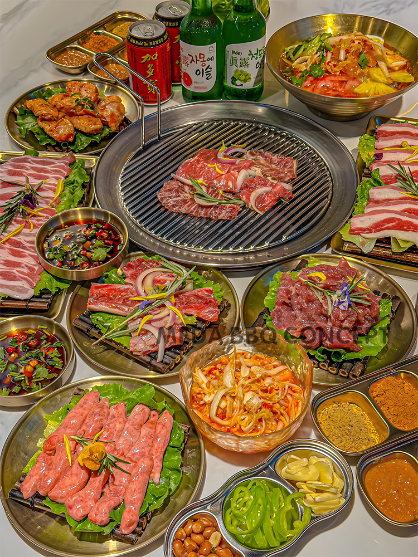
Korean BBQ
Ingredient Selection
Japanese Grilled Meat: Ingredients include beef, pork, chicken, seafood, etc. The focus is on the quality of the meat itself, with a preference for cuts with uniform fat distribution, such as beef short ribs and beef ribeye.
Side dishes typically feature fresh vegetables such lettuce, onions, and cucumbers, served alongside the grilled meat to complement the flavors or cut through richness.
Korean Grilled Meat: Focused on beef and pork, it favors cuts with higher fat content, such as beef brisket, beef shoulder, thick-sliced pork belly, and pork neck.Side dishes are pickled vegetables such as kimchi, pickled chives, and pickled radish.
Flavor
Japanese Yakiniku emphasizes the natural taste of ingredients, prioritizing simplicity to highlight the inherent flavors.
Korean BBQ focuses on rich, bold flavors, often achieved through robust marinades and seasonings.
Differences in Cooking Methods and Utensils
Japanese prefer to use a Japanese charcoal grill, paired with a grilling net, so that the ingredients can come directly into contact with the charcoal fire.
The key operational technique lies in monitoring the charcoal temperature—instead of pre-coating the meat with oil, it utilizes the natural fats of the ingredients for grilling.
They frequently flipped the meat with tongs to prevent juice loss. Japanese grilling emphasizes high-temperature quick flipping to achieve a caramelized exterior and tender interior (such as medium-rare beef), and then wraps it in fresh vegetables.
Due to the focus on doneness and texture, staff at Yakiniku restaurants usually assist customers with grilling.


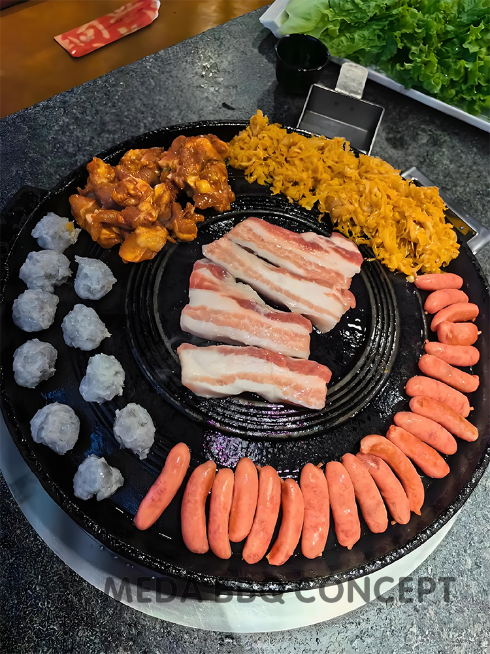
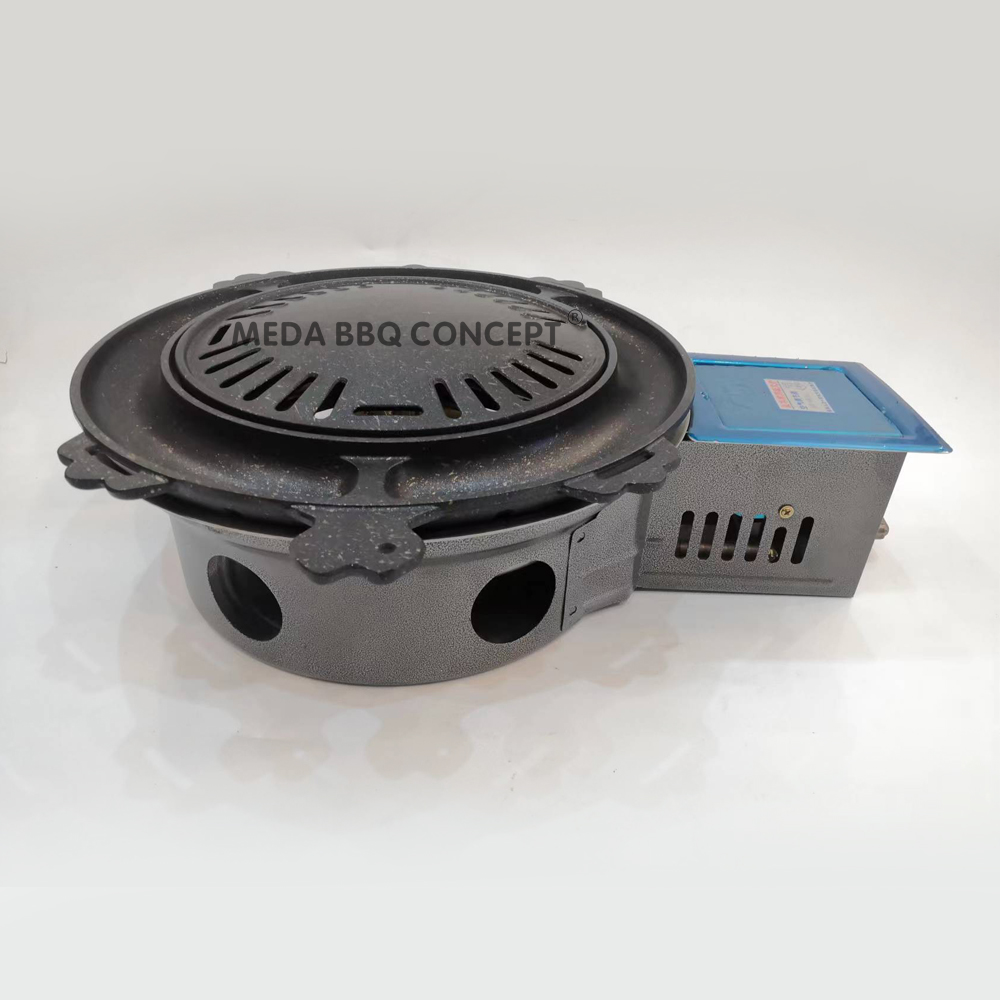
Korean barbecue offers greater diversity in BBQ griller selection, commonly using Korean gas BBQ grillers and Korean electric BBQ grillers, with a few still opting for Korean charcoal grills.
Thanks to the temperature control systems in gas and electric grills, they are ideal for pan-grilling.
During operation, they apply some cooking oil to the BBQ grill plate to prevent sticking, and ingredients are then pan-grilled to render their fats. Once both sides turn golden and crispy, they are cut into small pieces with scissors before consumption.
What is Yakiniku Grill?
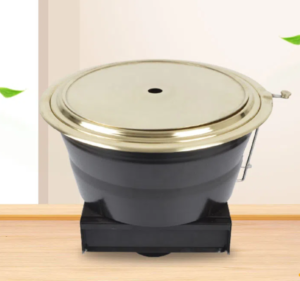
Yakiniku Japan barbecue is the result of global cultural integration, but when it comes to grills, there are three dominant types. The mainstream Japanese grills currently include:Charcoal grillElectric grillGas grill
Japanese grill charcoal type
Yakiniku charcoal grilling is the traditional method of Japanese barbecue.
When charcoal burns, it produces a smoky aroma, and grilling with charcoal imparts a unique smoky flavor to the ingredients, significantly enhancing the taste of the barbecue—something that other grilling methods cannot achieve.
The continuous high temperature of charcoal fire quickly cooks the surface of the ingredients, locking in the internal juices to create a crispy exterior and tender interior with soft meat, preserving the most primitive taste of grilling to the greatest extent.
If you want to experience the cultural atmosphere of traditional Yakiniku grilling, be sure to choose a Yakiniku charcoal BBQ grill.

Japanese yakiniku grill electric type
If charcoal burning was the first cooking method learned by ancient humans, then Yakiniku BBQ electric grills showcase the results of technological progress and development.
Just flip the switch, adjust the temperature, and start grilling.
Equipped with temperature control devices, electric grills allow precise heat regulation, preventing overcooking or charring. Even beginners can operate them effortlessly. They produce no irritating smoke and eliminate the risk of carbon monoxide poisoning.
Cleanup is a breeze when used with non-stick BBQ grill pans, saving even more time. Highly suitable for indoor Yakiniku grill restaurants.

Japanese BBQ grill gas type
If you want to savor the flavor of flame-grilled ingredients while enjoying the convenience of easy post-meal cleaning, a Yakiniku Japanese gas grill is the perfect choice.
Gas grills are extremely easy to operate, typically using push-button ignition. By adjusting the gas valve to control the gas output, you can effectively regulate the temperature.
Gas grills heat up incredibly fast, with uniform flame distribution, allowing you to adjust the heat intensity in different areas according to the size of the ingredients.
Compared to charcoal grills, Yakiniku gas grills produce less smoke, enabling ingredients to retain the flavor of open-flame grilling while being easy to clean and saving operational space.

The Newest Japanese Indoor Grill
The newest Japanese indoor grill electric type delivers barbecue with a taste comparable to that of a charcoal grill.
Yakiniku Japanese restaurants that prefer charcoal or gas grilling mainly do so because food grilled over charcoal or an open flame tastes more delicious, with a richer charred aroma and more layered textures.
However, due to safety concerns, fire departments in some regions may ban the use of charcoal and gas grills in restaurants, allowing only electric grilling.
In such cases, many Yakiniku restaurant owners are left perplexed: isn’t there a Yakiniku electric grill that can replicate the taste of Yakiniku charcoal-grilled ingredients?
There was none before, but now there is.
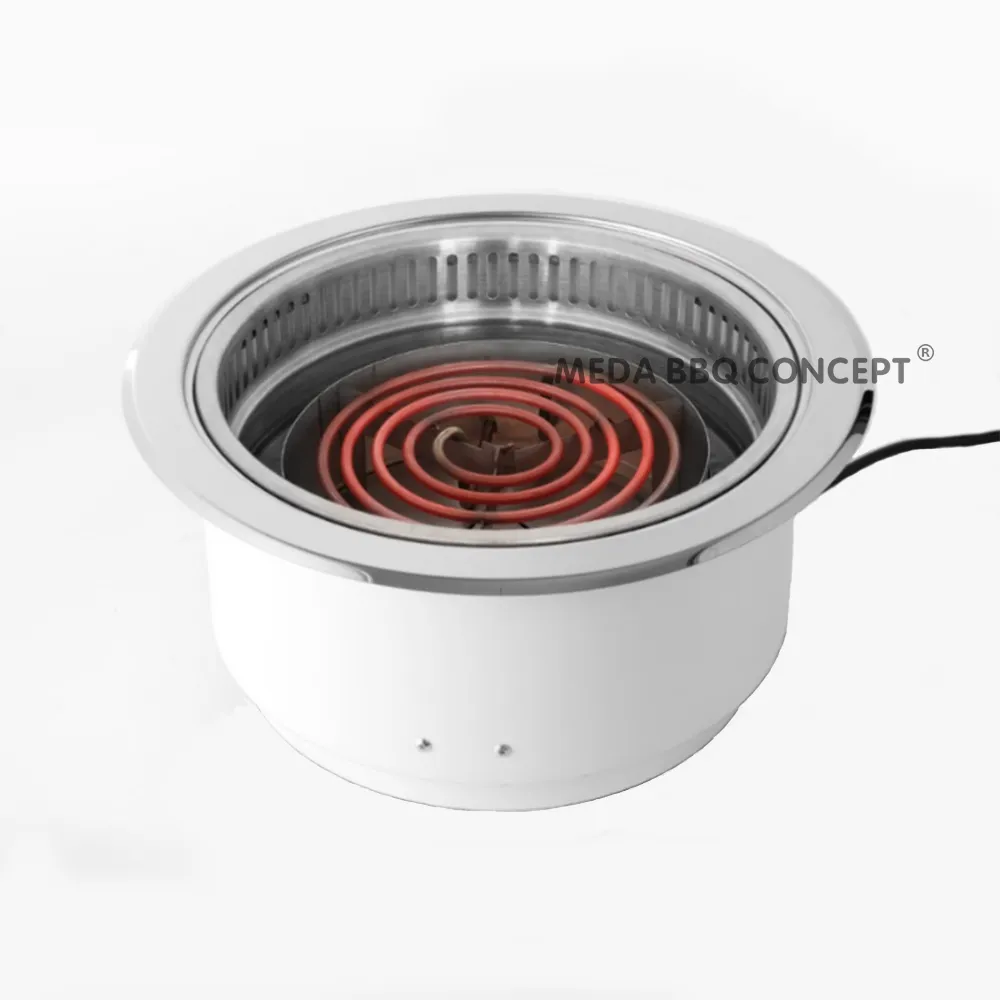


This electric Japanese grilling can be used with a grill mesh and a perforated BBQ grill plate.
It simulates the heating principle of charcoal, where heating tubes generate heat to raise the surrounding temperature, allowing food to be heated from a distance and naturally grilled with uniform heat rather than producing a frying effect.
The ingredients cooked on this Yakiniku electric grill taste identical to those grilled with charcoal, marking a significant technological breakthrough in the history of electric grills.


Yakiniku Table Grill VS Korean BBQ Table
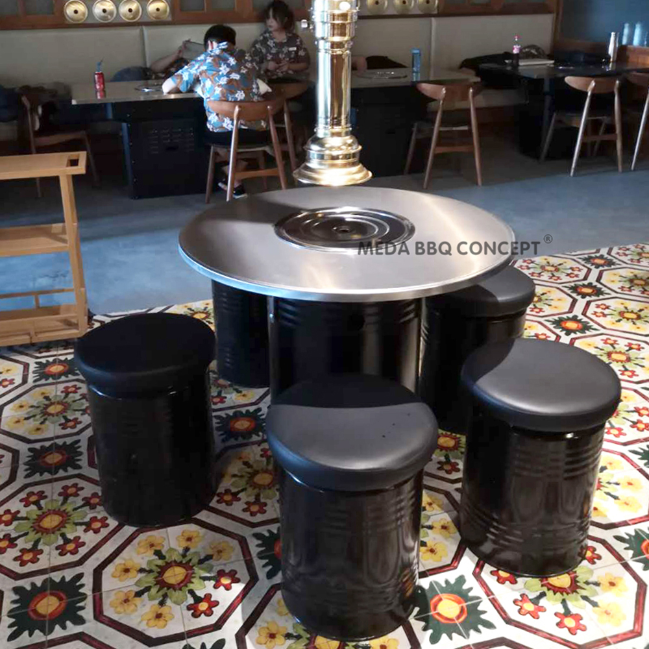
There are many differences between Yakiniku Japanese BBQ tables and Korean BBQ tables in terms of design aesthetics, functional configurations, and other aspects.
Japanese BBQ grill table embraces a minimalist and natural design ethos, eschewing ornate decorations.
Most tabletops feature square or rectangular shapes, crafted from premium materials like high-quality wood and stone, which evoke a sense of natural tranquility.
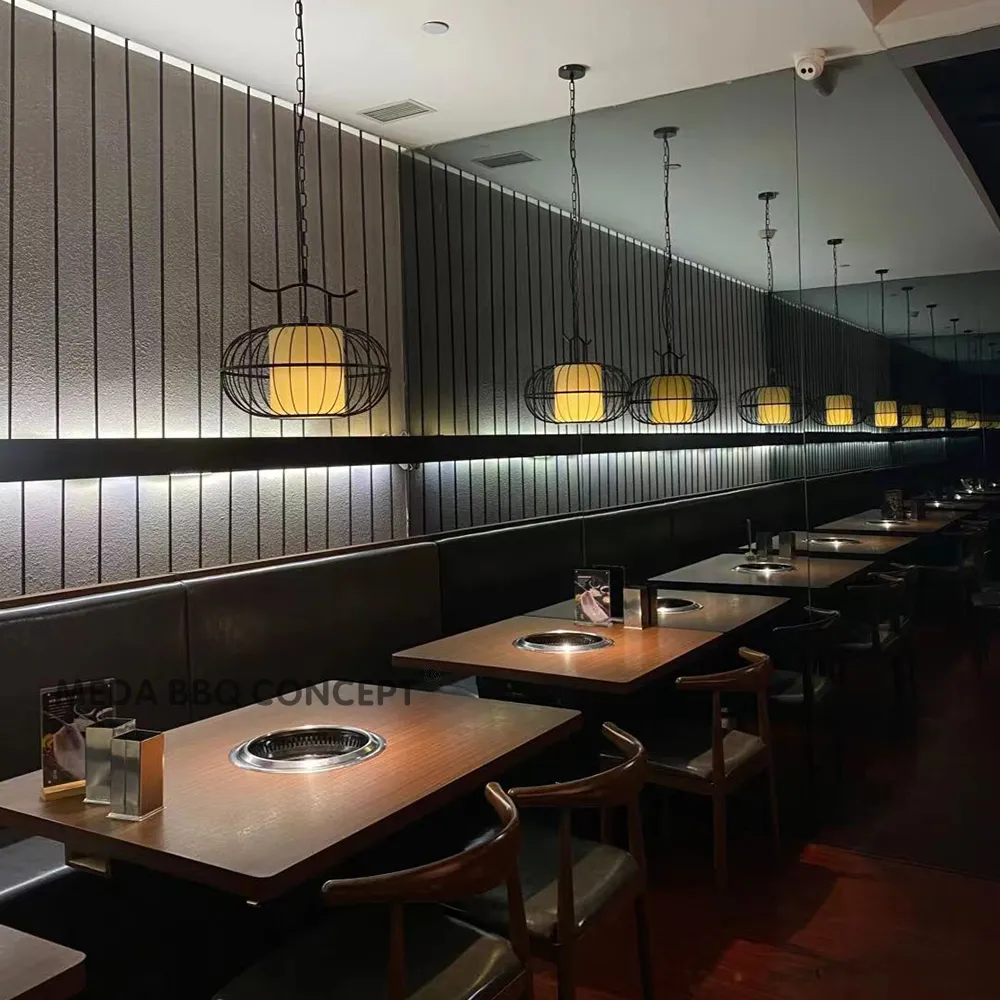

Korean BBQ tables are typically constructed with metal as the primary material, featuring smooth surfaces that are easy to clean, scratch-resistant, and heat-resistant.
They place greater emphasis on decoration, boasting exquisite appearances. The tabletop shapes include squares, rectangles, and circles catering to different spatial layouts.

How to deal with the BBQ smoke problem in Japanese Yakiniku BBQ?
When considering oil fume issues in Japanese Yakiniku restaurants, solutions often integrate Yakiniku BBQ grill design, restaurant layout, and opt for either an upper exhaust system or a lower exhaust system.
Up-draft Smoke Exhaust
The upper exhaust system is widely used in Japanese barbecue. Its core principle involves installing a telescopic Japanese BBQ exhaust pipe directly above the Yakiniku grill.
This exhaust pipe is pre-equipped with a high-powered fan unit, connected to an outdoor exhaust system through ceiling ducts. The strong suction of the fan effectively draws away BBQ smoke.


This retractable Yakiniku BBQ exhaust hood can be extended to 10-20cm above the grill when in use, and retracted into the ceiling when not needed.
Its advantages lie in convenient and quick installation, low cost, no need to damage the floor, and the possibility of post-installation.
The difference between Yakiniku and Korean BBQ exhaust pipes lies in that the former features more comprehensive functions and more sophisticated manufacturing processes.

Japanese yakiniku BBQ exhaust pipes typically come with an integrated oil fume filter box.
Its purpose is to prevent excessive grease from being sucked into the mainpipe, thus avoiding grease accumulation in the main pipeline that could impair the restaurant’s overall exhaust efficiency.

The oil fume filter box is detachable, enabling Yakiniku restaurants to clean it regularly and maintain smooth airflow and internal cleanliness of the barbecue exhaust pipe.
For a bustling barbecue restaurant, MEDA BBQ CONCEPT suggest you to clean the main pipeline once every quarter.
In addition to oil fume filtration, fireproof requirements for Yakiniku BBQ exhaust pipes are also indispensable in Japanese standards.
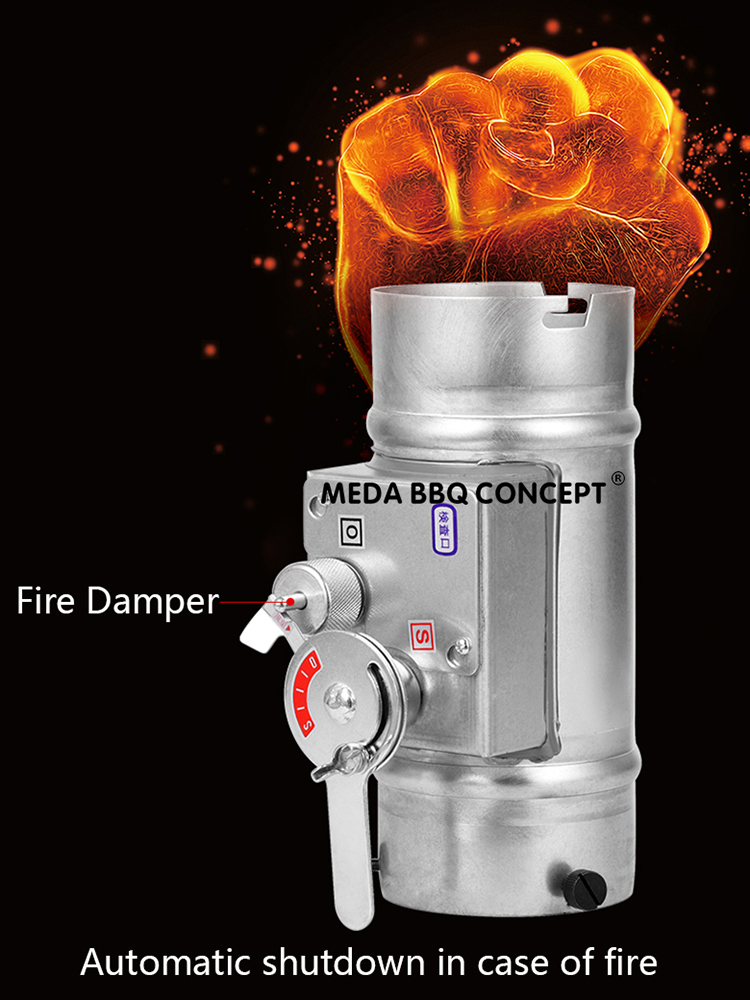
If using a gas or charcoal-type Japanese table grill with an open flame, the barbeque exhaust pipe may also carry away a small amount of heat from the grill and might suck in small flames.
If too much grease accumulates in the pipe, the small flames could ignite the grease inside the BBQ exhaust pipe, causing combustion within the exhaust duct.
Japanese exhaust pipes come with a built-in fire prevention system. The tin in the fire prevention system will melt due to high temperatures if combustion occurs inside the exhaust pipe, causing the valve to close.
This valve cuts off the connection between the exhaust pipe and the main pipe, preventing the fire source from entering the main pipe and thus avoiding fire accidents.

Each Japanese exhaust pipe can work with a small fan at the upper end.
The function of the small fan is to assist the BBQ exhaust pipe in smoking, increase the pressure inside the smoke exhaust pipe, and strengthen the suction force of the smoke exhaust pipe.
If you were to open a Yakiniku barbecue restaurant, would you equip each Japanese exhaust pipe with a small fan? What determines whether a Yakiniku barbecue restaurant uses small fans?
Whether small fans are needed for local pressurization depends on the length and complexity of the pipeline.
If the pipeline is long (more than 15 meters), has many bends (more than 3), or needs to cross the second floor, it is recommended to install small fans at the branch pipes or ends to assist in smoke exhaust.
For short-distance direct exhaust (such as roof discharge), small fans may not be necessary if the main fan is sufficient.
Down-draft Smoke Exhaust
The bottom BBQ exhaust system can hide the BBQ smoke exhaust pipes, making the environment more aesthetically pleasing, which is suitable for a high-end Yakiniku Japanese restaurant.
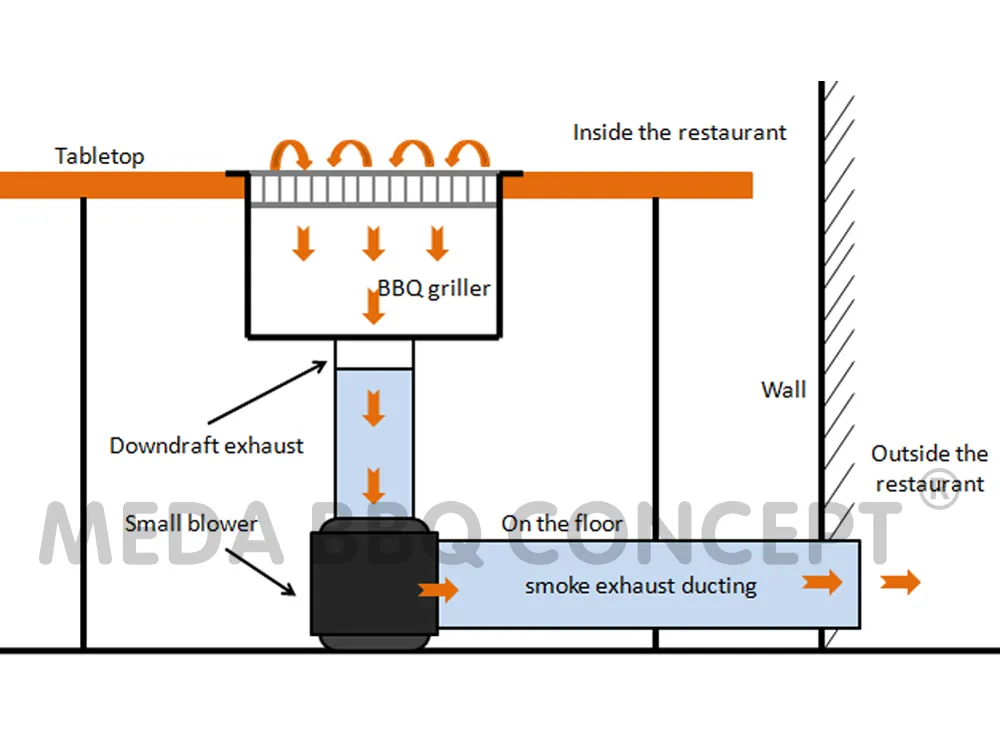

It requires planning the underground smoke exhaust pipes during the store renovation, and matching them with specially designed Yakiniku grill tables and indoor Japanese grills to complete the oil fume exhaust.
The Yakiniku grill has invisible air inlets beside the BBQ grill plate and smoke exhaust holes at the bottom of the grill.
Oil fumes will pass through the invisible air inlets of the Yakiniku grill, reach the smoke exhaust pipes under the table, and then enter the underground exhaust system to complete the smoke discharge.
Its advantage lies in the absence of exposed exhaust pipes, creating a visually cleaner environment. Additionally, it prevents oil fumes from passing in front of diners, ensuring a more comfortable dining experience.
What is the Difference Between Yakiniku and Yakitori?
Japanese yakiniku mainly uses beef, pork, and chicken as meat ingredients. Paired with a Yakiniku indoor grill and BBQ grill mesh, diners can grill the food in person, increasing interactivity.
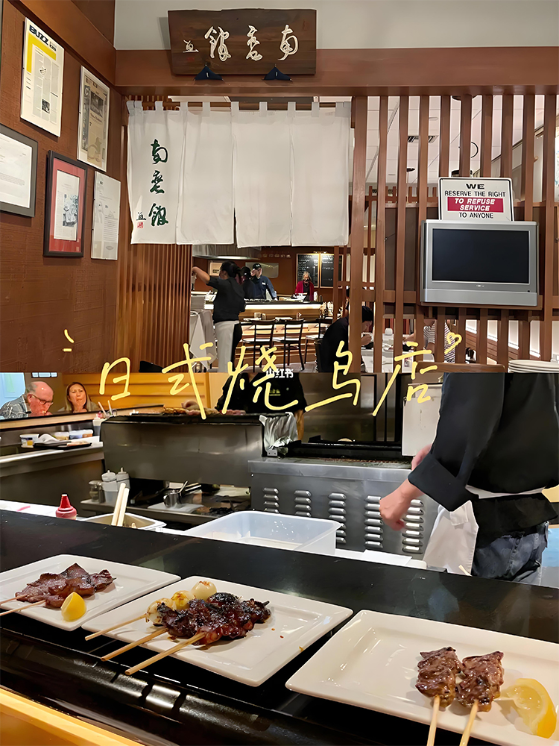
Japanese yakitori primarily features chicken (including organ meats) skewered on bamboo sticks and grilled.
Deeply rooted in izakaya culture, these charcoal-grilled skewers are classic drinking snacks, typically prepared by chefs in open kitchen counters and served ready-to-eat, making them ideal for solo diners or small groups of 2-3 people.
What is the Teppanyaki?
They use high-temperature iron plates as cooking tools for Japanese teppanyaki. The ingredients are expensive, such as A5 wagyu beef, lobsters, and foie gras.
Chefs will cook on-site in front of customers, performing flame cooking and displaying exquisite knife skills.
During the preparation process, chefs will also explain to customers the origin of ingredients, cooking techniques, historical anecdotes, and customs, which is highly ornamental.
Due to the high-end ingredients and chef performance services, the price is also higher. It is suitable for dates and business meals.

Japanese Yakiniku originates from ancient hunting culture, gradually taking shape through the integration of Korean barbecue and the influence of Western food culture.
After vigorous development, Japanese Yakiniku has become a popular choice for social gatherings among Japanese people with its unique flavor and social nature, occupying a dominant position in Japan’s catering industry.
Today, under the influence of globalization, it is attracting an increasing number of consumers from different countries. In the future, Japanese yakiniku will continue to embrace the trend of diversified integration.
In terms of taste, it can integrate flavors from different regions, continuously innovate in tastes, dishes, and dining models to create differentiation. For example, the model of combining Japanese yakiniku with Chinese hotpot has been deeply loved by people in mainland China.
With the development of technology, new electric Japanese style grills have come out. Technology can enhance the texture and efficiency of grilled meat, better meeting customers’ dining requirements.
In the global market, Japanese yakiniku is growing, promoting Japanese grilling culture worldwide. Meanwhile, in different countries and regions, it will undergo more localized innovations to adapt to local tastes and cultures.